How to Identify and Structure High-Value Opportunities in Your Opportunity Solution Tree
Great products start from understanding real user problems and needs. In an Opportunity Solution Tree (OST), surfacing the right opportunities is essential. They form the foundation for all successful solutions and outcomes. Here’s how to find, define, and organize opportunities that drive meaningful progress in your product discovery.
Where Do Opportunities Come From?
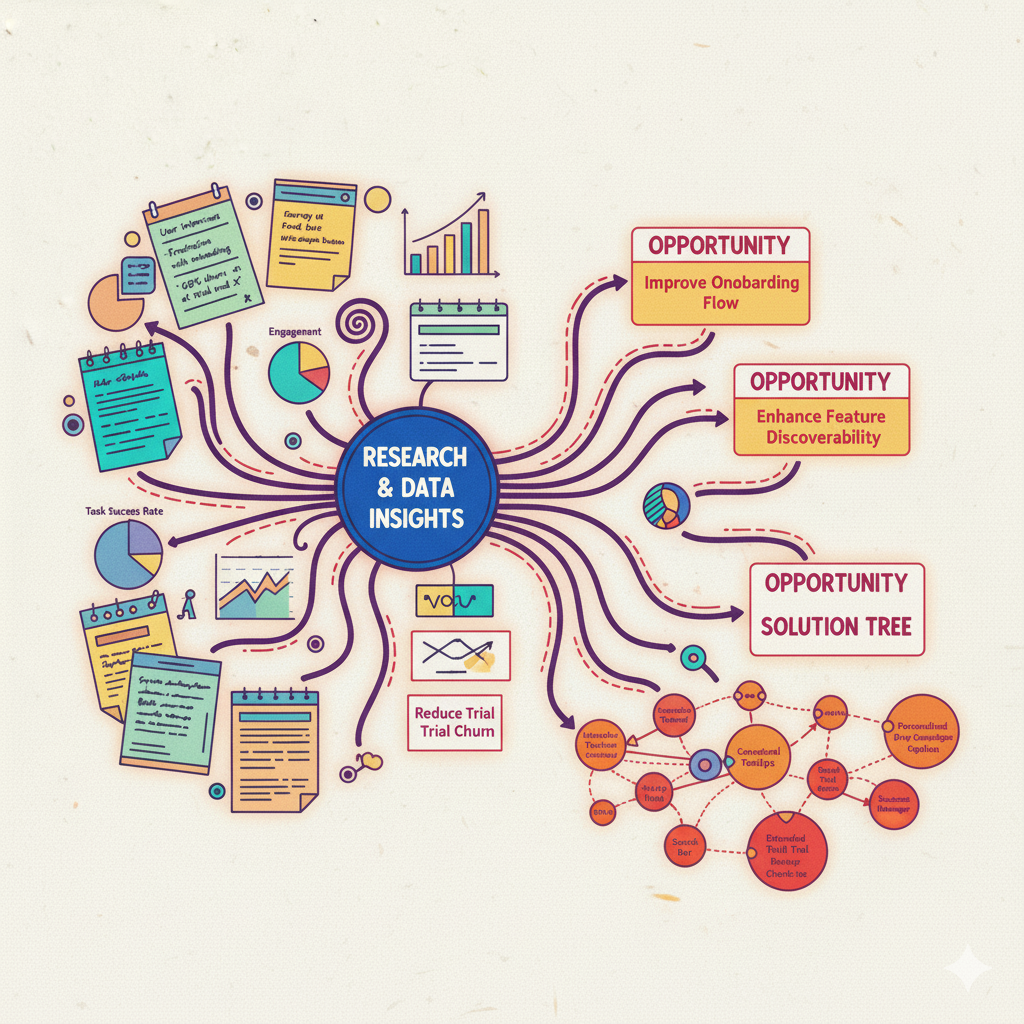
Opportunities originate in actual user challenges, needs, and pain points. Opportunities should never be brainstormed solutions or guesses. The best sources for discovering opportunities include [Product Talk]:
- Customer Interviews: Probe into daily routines, frustrations, goals, and hacks users employ.
- Surveys & Feedback: Aggregate common requests, complaints, confusions, or desires.
- Data Analytics: Uncover bottlenecks, drop-off points, or underutilized features through usage data.
- Support and Reviews: Identify trends in tickets, support logs, and user reviews for recurring issues.
As you compile findings, create a raw opportunity list that reflects direct user language and unsolved problems.
What Makes a Good Opportunity?
A good opportunity statement is clear, actionable, and focused on a problem or need, not a solution:
- Problem-Oriented: “Users struggle to find saved items quickly” is better than “Add a search feature.”
- Backed by Evidence: Supported with research, analytics, or observed patterns.
- Specific & Measurable: Avoid vague desires—clarify the user segment, context, and desired improvement.
- Actionable: Teams should be able to ideate multiple solutions to a well-stated opportunity.
Examples:
| Good Opportunity | Weak Opportunity |
|---|---|
| “New users drop off after onboarding.” | “Make onboarding better.” |
| “Customers can’t recover forgotten passwords.” | “People want more security.” |
| “Admins can’t easily track team progress.” | “Add a dashboard.” |
How to Structure Multiple Opportunities
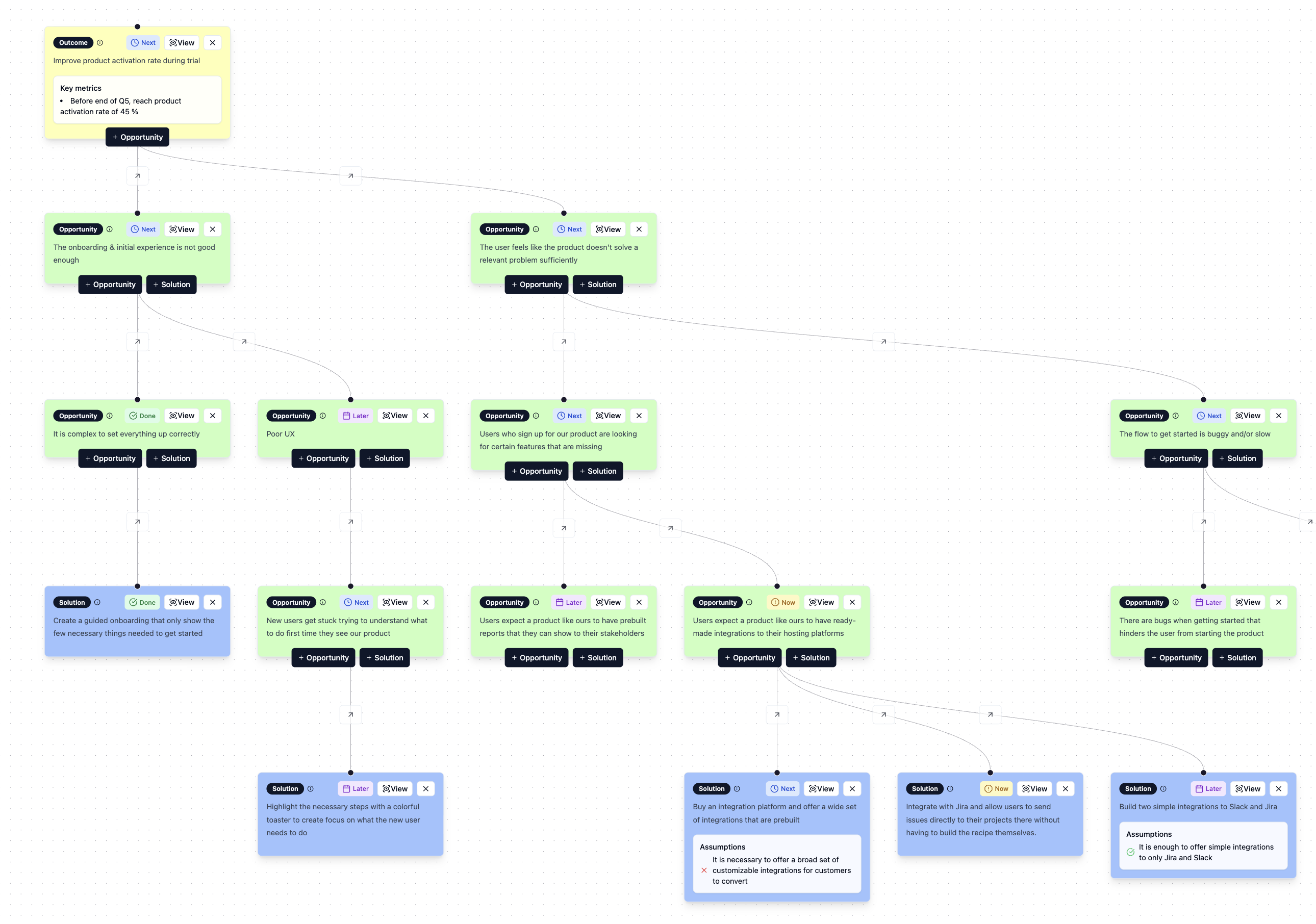
Once you have a set of opportunities, organize them beneath your OST’s outcome (the top goal). Consider:
- Segmenting by User Type: e.g., “First-time users”, “Long-term subscribers”.
- Product Journey Stages: Group needs according to the funnel—e.g., onboarding, engagement, retention.
- Problem Typology: Sort by context, such as technical blockers, usability issues, or unmet aspirational goals.
Review opportunities and decide when to merge similar ones (“Users forget login info” and “Users can’t reset passwords”) or split broad ones into distinct branches (“Users struggle with team setup” → “Confused by invitations,” “Can’t assign roles”).
Common Pitfalls
- Mistaking Solutions for Opportunities: Always start from the problem or need—avoid filling your OST with product features.
- Overpopulating or Oversimplifying: Too many vague branches create noise; too few miss nuance. Focus each branch on a specific, evidence-backed opportunity.
- Using Vague Language: Make opportunity statements precise and testable.
Templates & Next Steps
To begin, try mapping your OST starting with one primary outcome and 3–5 researched opportunities beneath it. Use evidence and keep statements problem-focused. Regularly revisit and refine as new insights emerge.
OppFlow makes structuring and organizing opportunities easy with visual editing, opportunity details, and user feedback linkage throughout the discovery process.
Sources: